Speak to Yourself: The Power of Self-Compassion and Love
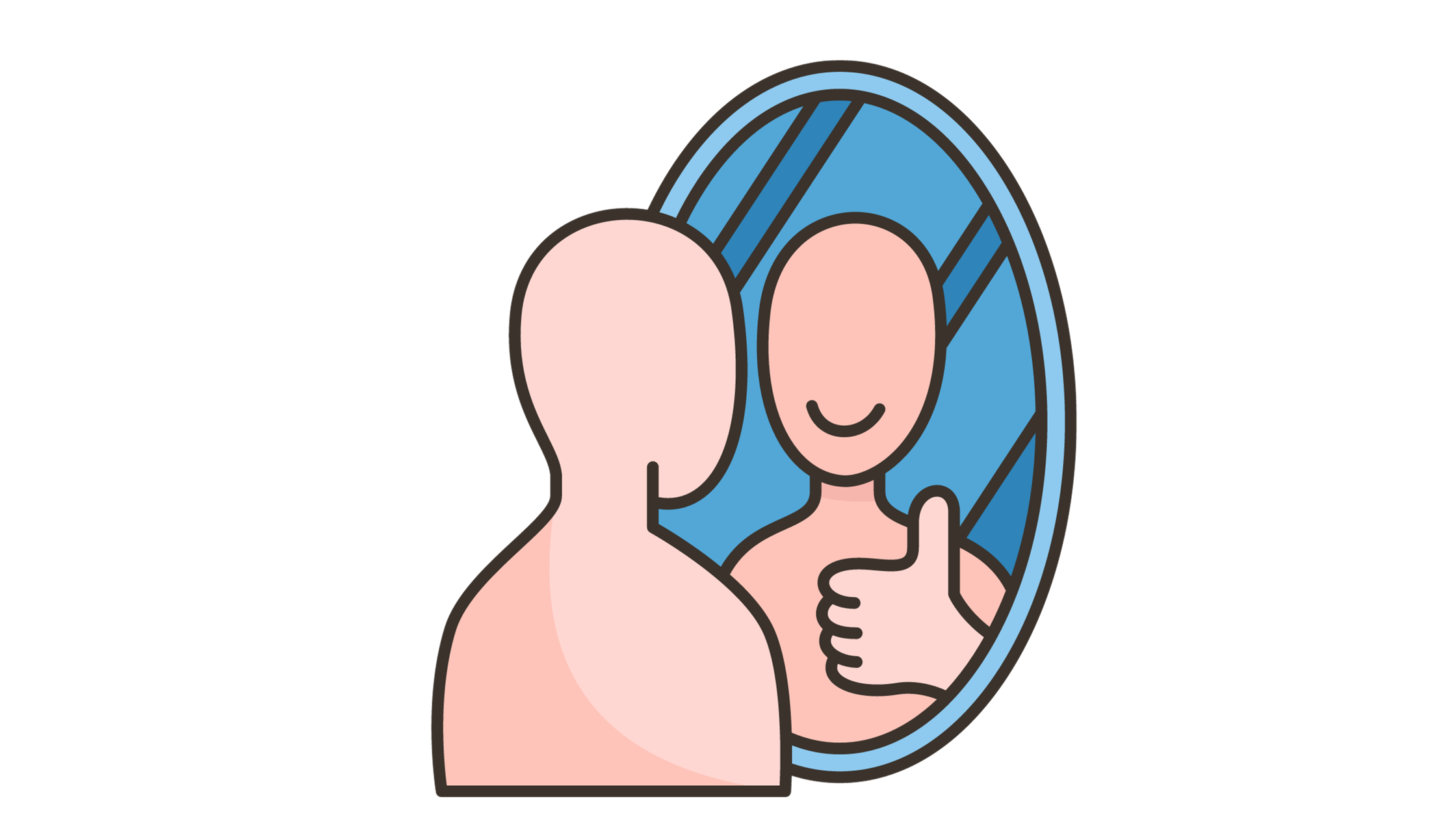
In life’s journey, we often forget to extend the same love, care, and kindness to ourselves that we readily offer to our loved ones, especially in a romantic relationship. But what if we treated ourselves with the same compassion and understanding as we do with our new love interests? The concept of self-compassion is a powerful tool that can transform how we view ourselves and navigate life’s challenges. In this article, we’ll explore the importance of self-compassion and how it can lead to increased self-esteem and self-confidence.
The New Love Perspective
We naturally communicate with kindness and care when we’re in love, whether with a new girlfriend or boyfriend. Our tone is gentle, and our behavior reflects our affection. Even when our partner makes a mistake, we reassure them, saying, “It’s OK, everything will be fine. Everyone makes mistakes; it wasn’t your fault.” We provide them with the Support and understanding they need to navigate difficulties.
The Self-Talk Challenge
Now, let’s shift the focus to how we treat ourselves. When we recall our mistakes, even those from years ago, we tend to hold onto self-guilt. Instead of offering the same compassion we give to others, we engage in harsh self-talk. We might ask ourselves, “What have I done? I’ve made a terrible mistake,” and similar negative self-assessments. This self-criticism can take a toll on our mental well-being, gradually chipping away our self-esteem and self-confidence.
The Power of Self-Compassion
Self-compassion is treating ourselves with the same kindness, understanding, and forgiveness we extend to our loved ones. It involves acknowledging our imperfections and mistakes without judgment. Here’s why it’s essential:
1. Mental Resilience: Self-compassion equips us with mental resilience. When we encounter challenging situations or make mistakes, self-compassion allows us to respond with self-soothing and self-supportive thoughts. This, in turn, reduces stress and anxiety.
2. Increased Self-Esteem: We gradually build a positive self-image by practicing self-compassion. We learn to accept ourselves as flawed yet inherently valuable human beings. This improved self-esteem can lead to healthier relationships and greater overall life satisfaction.
3. Enhanced Self-Confidence: When we treat ourselves with kindness and understanding, we become more confident in our abilities. We are more willing to take risks and pursue our goals, knowing that even if we stumble, we can offer ourselves the same comfort as a loved one.
Cuddle Self-Compassion
To start embracing self-compassion in your life, consider the following steps:
1. Mindfulness: Begin by becoming aware of your self-talk and how you treat yourself when faced with challenges or mistakes.
2. Practice Self-forgiveness: When you make a mistake, remind yourself that you are only human, and mistakes are a natural part of life. Offer yourself forgiveness and understanding.
3. Positive Self-Affirmations: Replace negative self-talk with positive affirmations. Remind yourself of your strengths and capabilities.
4. Seek Support: Don’t hesitate to seek Support from friends, family, or a therapist. Sometimes, external perspectives can help you develop self-compassion.
Conclusion:
Treating yourself with the same compassion and kindness as you do with your new love interest can be a transformative experience. Self-compassion is not self-indulgence; it’s a powerful tool for building mental resilience, increasing self-esteem, and enhancing self-confidence. By practicing self-compassion, you can easily navigate life’s challenges and lead a more fulfilling life.
Remember, you are your longest and most important relationship. Cultivate self-compassion and watch as it strengthens your foundation for a brighter future.
How a Single WORD can Impact Our Stress Levels

In the hustle and bustle of our daily lives, it’s not uncommon to find ourselves overwhelmed by a seemingly never-ending list of tasks. The pressure of work can mount, and stress often becomes our unwelcome companion. But what if I told you that a simple change in the words you use could significantly impact your stress levels and productivity? Let’s explore the transformative power of words.
The Words We Use
Imagine this scenario: You have a pile of tasks to tackle. What’s your usual self-talk? Do you catch yourself saying, “I have to do this,” “I have to complete the presentation,” or “I have to attend the meeting”? These phrases might seem innocuous, but they carry a weight of obligation that can lead to increased stress levels.
The Stress of “I HAVE TO”
When we utter phrases like “I HAVE TO,” we inadvertently impose a sense of pressure and obligation on ourselves. It’s as if the weight of the world rests on our shoulders, and the stress begins to build. But what if we could change that narrative?
The Power of “I WANT”
Let’s replace “HAVE” with “WANT.” Instead of saying, “I have to complete the presentation,” try saying, “I WANT to complete the presentation.” Notice the difference? Shifting from obligation to desire can create a sense of relaxation and empowerment.
Adding a Positive Twist
Now, let’s take it a step further. When faced with a daunting task, add another word to your daily vocabulary: “TASK.” Say, “I WANT to complete this TASK to create my FORTUNE.” Suddenly, that task becomes a stepping stone toward your goals and dreams. It’s a subtle yet powerful shift in perspective.
Embracing Positivity in Everyday Conversations
By replacing a few key words in your daily conversations, you can significantly impact your stress levels and overall well-being. It’s a simple but effective strategy that can keep you relaxed in your day-to-day life.
In a world where stress seems inevitable, remember the power of your words. Embrace positivity, transform your mindset, and watch as your stress melts away, making room for productivity and peace of mind.
Start today by consciously choosing your words. Say, “I WANT” instead of “I HAVE TO,” and add the magic of “TASK” to your daily goals. You’ll be amazed at the difference it makes.
Doe’s Self-Help Books Really Work, and If NOT, Why?
Why was it named Self-Help Books?
Self-help books, by their very nature, are meant to guide and assist individuals in their personal growth journey. However, it’s essential to understand that they can’t magically transform your life; that’s why they are called ‘self-help.’ No one can motivate you except yourself; motivation comes from within.
Package of Knowledge
Now, you might wonder, with this self-driven approach, why there are so many self-help books and why some of them have become all-time bestsellers. The answer lies in the content they offer. These books are packed with a plethora of tools and techniques designed to be applied in our daily lives.
University of Knowledge
Consider reading these books as attending your personal ‘University of Knowledge.’ However, knowledge alone has potential power. True transformation occurs when we take that knowledge and turn it into a skill, applying it actively in our lives. It’s the practical application that brings about real change.
The Importance of Application
Even if you read just one book and love its content, setting it aside afterward won’t yield lasting benefits. Some books are worth revisiting repeatedly until their wisdom becomes ingrained in your DNA. Subconsciously, you start applying these teachings to your daily life.
Bob Proctor’s Daily Ritual
Take, for example, Bob Proctor, a bestselling author and motivational speaker. He famously mentioned that he reads ‘Think and Grow Rich’ by Napoleon Hill every day, even if it’s just a single page. The consistent application of the book’s principles has had a profound impact on his life.
Conclusion: The Power of Action
In conclusion, after reading a self-help book, the true test lies in applying the tools and techniques it provides to your life. Only then will you witness the positive changes it can bring about. So, next time you pick up a self-help book, remember that its power lies not just in its words but in your actions.
Are you making the most of your commute time?

Learn how to conquer on-road time with a secret weapon-AUDIOBOOKS

We process information through three primary channels:
- Visual
- Auditory
- Kinesthetic (touch)
Most individuals tend to excel in one of these channels when absorbing information. For many, visual learning is their strong suit.
However, some, like myself, thrive in the auditory domain.
In my case, I’m an excellent auditory learner. I manage to complete at least 2 to 3 books per week by listening to audiobooks while driving.
However, when I’m driving with my wife, I often choose to listen to music since she finds it challenging to absorb information through auditory means.
If you find that you can absorb content effectively through listening, you likely have a strong auditory learning style.
The third channel, kinesthetic, comes into play when people engage in hands-on learning, such as writing, during their school days.
This approach combines all three sensory modes: visual, kinesthetic, and auditory. It incorporates auditory learning because we recall and repeat sentences verbally, and it involves writing as well.
That’s why I recall the advice from our teachers in school days: “While studying, take notes alongside reading, and you’ll retain more.” This approach engages all three sensory methods simultaneously.
Harnessing audiobooks can be incredibly beneficial, especially during travel, as you can make productive use of your time. To quote the motivational speaker Brian Tracy, audio programs are like a
“UNIVERSITY ON THE WHEELS”
Thank you for reading.
Pranab Hazarika
www.PranabHazarika.com
Would life have been different if we all knew when we were to die?


Imagine a world where we all possess knowledge of the exact date of our demise. It’s a profound thought, isn’t it? At first glance, it may seem unsettling, even macabre. However, a closer look reveals that this hypothetical scenario could potentially lead to a profound transformation in the way we live our lives.
Prioritizing the Essence of Life
One of the most significant shifts that would occur if we knew our death date is our newfound perspective on time and priorities. We would instinctively give precedence to the most valuable aspects of our lives. Instead of dedicating the lion’s share of our time to the office, we’d redirect our focus towards spending quality time with our families.
The rat race that often consumes us, chasing promotions and financial success, would lose much of its allure. We’d realize that, in the grand scheme of things, these pursuits might not hold the same weight as the relationships and experiences that truly matter. Our lives would become less about accumulating wealth and more about accumulating moments of joy and connection.
Chasing Passions, Not Deadlines
In this alternative reality, we’d be less inclined to follow societal norms that encourage us to invest our days in activities we might not be passionate about. Instead, we’d prioritize doing the things we genuinely love. We’d embark on adventures, pursue hobbies, and engage in creative endeavors with a sense of urgency.
The clock would be ticking, but not in the oppressive way we often perceive it. Instead, it would serve as a reminder to seize every opportunity for fulfillment, to make every moment count. We’d be more inclined to follow our hearts and explore our passions, unburdened by the fear of societal judgment or financial insecurity.
Appreciating the Invaluable
Perhaps the most profound change would be our newfound appreciation for the intangible, invaluable aspects of life. The things that have been with us all along, yet often taken for granted, would suddenly hold immeasurable worth.
Our families, the love we share, the happiness we experience, our thoughts, and our creativity would all become treasures beyond measure. We’d nurture these facets of life, invest our time and energy in them, and cherish them as the priceless gifts they are. Knowing our death date would make us acutely aware that these elements are the true essence of our existence.
In conclusion, contemplating the idea of knowing when we will die might initially appear unsettling, but it offers a unique perspective on the way we live our lives. It would lead us to prioritize family, passions, and the intangible gifts life bestows upon us. While we can’t predict the future, we can choose to embrace these values and make the most of the time we have, living a life rich in love, happiness, and authenticity.
Pranab Hazarika
www.PranabHazarika.com
Movies vs Books: Surprising Similarities

Movies and books are similar in nature.
Once you know it, you will start loving both.
Both require significant investment but offer a low price point.
I recently watched the Indian movie “Jawan,”, which had a budget of Rs. 300 crore.
However, the ticket price was only Rs. 300.
Thus, I relished a 300-crore movie experience for just Rs. 300.
In the 67th Indian National Film Award ceremony (Year 2021), Vice President of India M. Venkaiah Naidu conveyed a profound insight:
“Film is the most cost-effective form of entertainment.”
Likewise, when it comes to books:
The investment lies in the years of experience accrued by the author.
The price of a book can vary, typically around Rs. 300 to Rs. 500 or some more.
Authors invest their lifetimes in crafting a book, and readers can absorb their life’s wisdom in just a matter of 2 or 3 days.
For instance, the book “Think and Grow Rich” by Napoleon Hill, published in 1937 after 29 years of research, can now be read within a mere week.
(https://amzn.to/3rCNkGb)
Hence, we can access a wealth of knowledge and experience at a modest cost and in a short timeframe.
Fortunately, I love them both 😊
Pranab Hazarika
www.PranabHazarika.com
Why Kids Master Mobile Devices Faster: Unveiling the Secrets

Why can children operate your mobile device faster than you?
What makes them quicker learners?
This phenomenon finds its explanation in the concept of the Morphogenetic Field.
“Morpho” relates to giving rise to form, and biochemist Alfred Rupert Sheldrake at Cambridge University introduced this concept.
According to the idea of the morphogenetic field, “natural systems … inherit a collective memory from all previous things of their kind.”
Learning, therefore, becomes a cumulative process of intentions.
Similar to human evolution (from monkeys to humans), learning is also an evolutionary process.
In simpler terms, if something we’ve learned, is already part of the morphogenetic field (a field of intention), the next generation can swiftly acquire this knowledge.
Although some people have criticized Alfred Rupert Sheldrake,
However, we still haven’t discovered a more convincing explanation for why children can use their mobile devices more effortlessly and quickly than adults.
If you want to go deep into metaphysical concepts, I can recommend The Ultimate Dr. Deepak Chopra Collection
Pranab Hazarika
www.PranabHazarika.com
How Fast Can Your Mind Bounce Back?


Consider your mental health. How fast can it recover?
You can move swiftly and cover great distances when you’re physically healthy.
Just like your physical health, your mental health can improve faster if you’re in good shape.
Introduction
In our fast-paced lives, we often focus on our physical well-being, striving to stay fit and agile. We push ourselves to cover great distances, be it on foot, on a bike, or in a car. But what about our mental health? How swiftly can our minds recover from the daily challenges and emotional hurdles that life throws at us?
The Parallels Between Physical and Mental Health
Much like our physical health, our mental well-being can recover rapidly when it’s in good shape. Just as a healthy body allows us to move quickly and efficiently, a healthy mind enables us to bounce back from setbacks with ease. However, there’s a crucial factor that affects our mental resilience: the emotional baggage we carry.
The Weight of Emotional Baggage
Imagine your mind as a backpack, and within it, you carry anger, resentment, guilt, and sadness. These emotions weigh you down, making it challenging to move forward in life. The negative energy they generate acts as an anchor, preventing you from focusing on what truly matters.
The Key to Mental Liberation: Forgiveness and Letting Go
So, how can you lighten your mental load and clear your mind of this negative energy? The answer lies in a deceptively simple practice: forgiveness and letting go.
The ‘I RELEASE’ Practice
Begin by taking a deep breath. In that moment of stillness, repeat the phrase ‘I RELEASE’ to yourself. You can say it three times, five times, ten times, or as many times as you feel necessary. This isn’t about saying it aloud for the world to hear; it’s a private mantra for your inner self.
The Power of ‘I RELEASE’
The power of ‘I RELEASE’ lies in its ability to act as a mental reset button. It’s like shedding unnecessary baggage, allowing you to move forward with a lighter heart and a clearer mind. This practice can be performed silently at any moment, whether you’re at home, work, or anywhere else. The key is to do it whenever you feel the weight of negative emotions.
Skepticism and the Simple Solution
But perhaps you’re skeptical. Can something as simple as repeating a phrase really make a difference? The answer is a resounding yes. While it might sound too easy, the ‘I RELEASE’ practice has a profound impact on your mental state. It shifts your focus from dwelling on past grievances to embracing the present moment. You’ll feel an immediate sense of relief and relaxation.
The Power of Letting Go
In a world where we often seek complex solutions to our problems, sometimes the most effective remedies are the simplest. The ‘I RELEASE’ practice is a testament to the power of letting go and forgiving, allowing your mind to bounce back faster and with greater resilience.
Conclusion
In conclusion, just as a physically healthy body can cover great distances, a mentally healthy mind can recover quickly. The key is to shed the heavy burdens of anger, resentment, guilt, and sadness that we often carry. Embrace the ‘I RELEASE’ practice, and you’ll find that your mind can bounce back with remarkable speed. Give it a try, and you’ll experience the instant impact it can have on your mental well-being.
Pranab Hazarika
www.PranabHazarika.com
Earlier, I said YES to the gym; now I say NO…

I have realized one thing.
Life is straightforward. Life is EASY..
Life is BINARY… 1 or 0.
Either YES or NO.
Do you want to be healthy? Your Answer might be definitely YES.
I have the same Answer. I share the same sentiment.
In the years 2017–18, during a routine blood test, a slight increase in my cholesterol levels was detected.
However, my doctor didn’t prescribe any medication. Instead, the prescription was simple: commit to 30 minutes of daily exercise.
I took it seriously and said YES to the gym. I did continuous, two-year-dedicated exercise.
So, my cholesterol became normal, and I was in good shape.
Then, the bumper season of Corona lockdown started, and I stopped going to the gym.
Though, at that time, everyone was conscious of their exercise, I thought it was okay because I had already done a lot.
So I said NO to exercise.
I concentrated more on Netflix and Hotstar in those days.
Though the Lockdown was over and gyms were open, my NO continued to go to the gym and exercise.
So now I have said YES to tablets or medicine to control my cholesterol level.
Life is just in between YES or NO.
You want to be Rich: YES.
Do you want to be an entrepreneur? YES or NO.
But there is a big BUT in some cases. And that BUT makes all the complexity in life.
So try to choose between YES or NO. As much as you can avoid the BUT, life is easy.
Do you want to work out? I think the Answer is definitely YES.
So simple: start exercising, even if it takes one push-up. That’s it…
Pranab Hazarika
www.PranabHazarika.com
Behind simplicity lies a lot of hard work…


Simplifying Education: The Teacher’s Secret
Have you ever had a math teacher who made solving complex equations feel like a cakewalk? 📚🧮 They had a knack for simplifying the most challenging concepts, didn’t they? But have you ever wondered what’s hidden behind that simplicity?
The Teacher’s Dedication: Knowledge and Hard Work
Great teachers, like the one we fondly remember, possess a deep understanding of their subject and put in a tremendous amount of hard work to make it easy for their students. It’s not just about being intelligent; it’s about having the knowledge, dedication, and commitment to teach.
Life’s Lessons: Facing Challenges with Ease
In life, the same principle applies. Those who effortlessly tackle challenges and calmly work through problems have often gathered invaluable life experiences from facing both the ups and downs.
The Wardrobe Chronicles: A Battle of Order and Chaos
Every month, I take some time to organize my wardrobe meticulously. I neatly arrange all my T-shirts, shirts, and everything else in their designated spots. This makes my mornings a breeze for the next week as I can easily find the shirts and T-shirts I need for work.
However, as time goes by, things tend to return to their chaotic, randomly scattered state. By the end of the month, it becomes a challenge to locate the specific T-shirt I want to wear and where it’s hiding.
The cycle repeats itself each month. I set aside one or two hours for the arduous task of rearranging my wardrobe, and this effort simplifies my life for the following week. It’s a constant battle between maintaining order and succumbing to the allure of disorder.
The Hidden Effort: Simplicity’s Paradox
The paradox of simplicity is that it often conceals the immense effort invested in making things appear easy. Consider, for example, cleaning your mobile apps or organizing the files on your laptop. It might seem like a straightforward task, but in reality, it demands time and effort. However, once you’ve invested that effort, it becomes remarkably simple to find what you need.
Organizing Digital Life: Mobile App Mastery
It took me approximately two days to organize all the apps on my mobile device. I created separate folders for different categories, such as video-related apps, finance-related apps, and study-related apps. As a result, I now have just two screens to swipe through on my mobile.
This organization method has made life much simpler. All my apps are neatly grouped in folders, making it a breeze to find specific apps like Netflix or Google Pay.
The Art of Making Complexity Simple
As you read this article, you might find it easy to understand and relate to. But that’s not by chance. Behind these words lies the effort to present complex ideas in a simple and digestible manner.
Acknowledging the Effort: A Tribute to Mastery
So, the next time you see a clear and simple solution to a problem or task, appreciate the hard work that went into making it that way. It’s a testament to human ingenuity and the relentless pursuit of making the complex seem effortless.
In Conclusion: The Mastery of Simplicity
In the end, simplicity is not the absence of effort; it’s the mastery of it.
Pranab Hazarika
www.PranabHazarika.com